
By the skin of your teeth
 Overall, “by the skin of your teeth” is an idiom used to highlight a situation where someone narrowly avoids a negative outcome or achieves success in an extremely close and challenging manner. It adds a dramatic touch to the story and emphasizes the thin margin between success and failure.
 “Break the ice” means to start a conversation and make a situation less awkward. It’s like melting tension and making people feel more comfortable.
  "Birds of a feather flock together" suggests that individuals with similar characteristics or interests tend to associate with each other. Drawing from the behavior of birds forming flocks of the same species, the proverb highlights the natural inclination for people to seek out like-minded individuals for companionship and support. Ultimately, it emphasizes the idea that shared traits or interests often serve as a basis for social connections and relationships.
 "Barking up the wrong tree" metaphorically describes pursuing a mistaken or misguided course of action or investigation. The phrase originates from the image of a hunting dog mistakenly barking at the wrong tree, wasting its efforts. It serves as a cautionary reminder to reconsider one's approach and focus on more promising avenues to achieve the desired outcome.
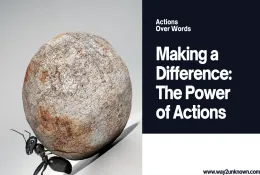 “Actions speak louder than words” means that what someone does is more important than what they say. It’s about how actions can show someone’s true intentions and character. It’s a reminder to pay attention to what people do rather than just what they say.
  “Kick the bucket” is a funny way to say someone died. It’s not clear where the phrase came from, but it’s used to talk about death in a light-hearted way. People might use it to make the topic less serious.
  "A perfect storm" symbolizes an exceptional and often disastrous convergence of circumstances or events. Originating from meteorology, the phrase has been metaphorically extended to describe any situation where multiple factors combine to create an overwhelming outcome. Whether in literal storms or metaphorical contexts like financial crises, it underscores the potent impact of interconnected elements aligning in a rare and powerful manner.
 "A penny for your thoughts" is a friendly and colloquial expression used to inquire about someone's thoughts or feelings. It suggests that the speaker values the other person's perspective and is interested in what they have to say. By offering to pay a small amount for their thoughts, the speaker aims to encourage conversation and establish a connection.

 "Head in the clouds" describes someone who is disconnected from reality, often lost in daydreams or unrealistic thoughts. This idiom suggests a lack of focus or practicality, leading to a tendency to neglect responsibilities or important details.
 "Heart of gold" describes someone with exceptionally kind and compassionate qualities, symbolizing their deeply caring and altruistic nature. It signifies a person who prioritizes the well-being of others above their own and consistently demonstrates empathy and selflessness in their actions. Individuals with a heart of gold are seen as sources of comfort and support, fostering connections and building communities based on compassion and mutual respect.
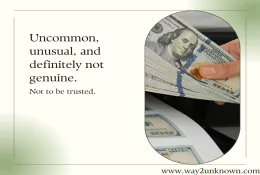 Overall, the idiom “as genuine as a three-dollar bill” is used to convey a sense of skepticism or disbelief about the authenticity or trustworthiness of something or someone. It’s a colorful way to express doubt or suspicion.
  So, to sum it up, the idiom “in the black” refers to a positive financial state where one is making a profit or has a positive balance. It’s a term used to describe financial stability and success.
 "In the red" refers to a financial situation where expenses exceed income, resulting in a negative balance. Originating from accounting practices, it symbolizes deficits or debts, often represented by red ink. Whether in business or personal finance, being "in the red" signifies financial difficulties and the need to address spending or revenue issues to achieve stability.
 "Making ends meet" refers to the ability to cover essential expenses with available income or resources. It involves budgeting, prioritizing needs, and sometimes making sacrifices to ensure financial stability. This phrase captures the ongoing challenge many face in balancing income and expenses to meet basic needs without going into debt or experiencing financial strain.