
Life is a bed of thorns
 In essence, “Life is a bed of thorns” encapsulates the idea that life’s path is not always easy, but by facing challenges with determination and courage, we can emerge stronger and more resilient individuals. It underscores the importance of resilience and the ability to endure hardships while striving for personal growth and fulfillment.
 "Calm before the storm" refers to a period of tranquility that precedes significant turmoil or activity. This idiom highlights the absurd contrast between deceptive peace and impending chaos, emphasizing the need to assess the situation thoroughly during this lull. Understanding this concept allows for strategic preparation, enabling individuals and organizations to exploit the calm for planning and fortification. By preparing during this tranquil period, one can better navigate the challenges that follow, turning potential chaos into manageable situations.
 "Can't see the forest for the trees" denotes the tendency to focus so much on specific details that one misses the larger context. This idiom highlights situations where intense focus on minor aspects can lead to misaligned priorities and inefficiencies. In various aspects of life, such as relationships or professional settings, this overemphasis on details can obscure the broader picture and prevent effective decision-making. Maintaining a balance between detailed focus and overarching vision is essential for strategic alignment and meaningful outcomes.
 In summary, the idiom “on the rocks” conveys a sense of difficulty, instability, or trouble in a particular situation, implying that proactive measures may be needed to overcome the obstacles and restore stability.
 In summary, the idiom “under a cloud” symbolizes a period of difficulty or uncertainty in a person’s life, where they face challenges in their reputation or circumstances.

 “Caught in the crossfire” means being unintentionally involved in a conflict between others. It’s like being stuck in the middle of an argument or fight that you didn’t choose to be part of. This idiom shows how someone can be affected by a dispute they have no control over.
 “In the thick of it” means being deeply involved in a challenging or intense situation. It’s like being right in the middle of a complex or difficult circumstance, where you need to focus all your attention and effort to deal with it effectively. People in this situation may feel overwhelmed or stressed due to the intensity of what they’re dealing with. It’s about being fully engaged and committed to addressing the challenges at hand with determination and resilience.
  “Down on one’s luck” means experiencing a period of misfortune or bad luck in life. It describes a situation where things are not going well, leading to feelings of helplessness and frustration.
  Being “in a funk” means feeling down or in a bad mood. It’s like being gloomy, unmotivated, or emotionally low. People can get into a funk due to stress, disappointment, or just feeling off. When in a funk, it’s hard to enjoy things and easy to feel irritable.
 "Sowing wild oats" describes a phase in someone's youth characterized by adventurous and often reckless behavior, especially in relationships and social experiences. The phrase originates from agriculture, likening youthful exploration to sowing seeds. It suggests a period of experimentation and self-discovery before settling into more stable adult responsibilities. The expression can carry both positive connotations of growth and learning, as well as negative implications of irresponsibility or hedonism.
 "Under the weather" is an idiom used to describe feeling ill or unwell, typically due to minor ailments like colds or headaches. The phrase suggests a temporary condition rather than a serious illness. Its origin is believed to be nautical, referring to sailors who were sent below deck to recover from sickness. In modern usage, it politely acknowledges someone's discomfort and the need for rest and recovery.
 "Go with the flow" means adapting to circumstances as they arise rather than trying to control every situation. It suggests a relaxed and flexible approach to life, embracing spontaneity and change. This concept aligns with philosophical ideas like Taoism's "wu wei," which emphasizes harmony with the natural order. Adopting this mindset can lead to greater resilience, reduced anxiety, and a smoother navigation through life's challenges.
 "A drop in the ocean" is an idiom that describes a very small and seemingly insignificant contribution compared to the vastness of the entire issue. It highlights the disparity between minor efforts and the larger problems they aim to address, suggesting a negligible impact. However, it also implies that cumulative small efforts can lead to significant change, much like an ocean is made up of countless drops. This dual perspective is relevant in areas such as environmental conservation and social activism, where individual contributions collectively make a meaningful difference.
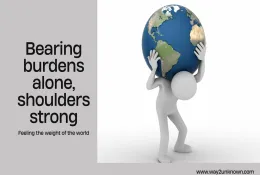 The Idiom highlights the feeling of being weighed down by worries or problems to the extent that it feels like an enormous, unmanageable burden. It conveys the sense of being overwhelmed by the challenges one faces and the emotional toll it takes on an individual.
 The Idiom conveys a sense of being in a difficult or risky situation where the individual may feel out of their depth and unsure of how to proceed. It can serve as a warning to recognize one’s limitations and seek help or guidance when necessary to avoid potential negative consequences.
 Overall, the idiom “in a dark place” serves as a metaphor for being in a state of emotional darkness, where one’s thoughts and feelings are clouded by negativity or distress.
  Overall, calling someone a “sad sack” is a way to describe their demeanor or attitude as consistently sad or disheartened. It’s important to remember that everyone has their ups and downs, but being labeled a “sad sack” usually implies a more persistent state of melancholy.